
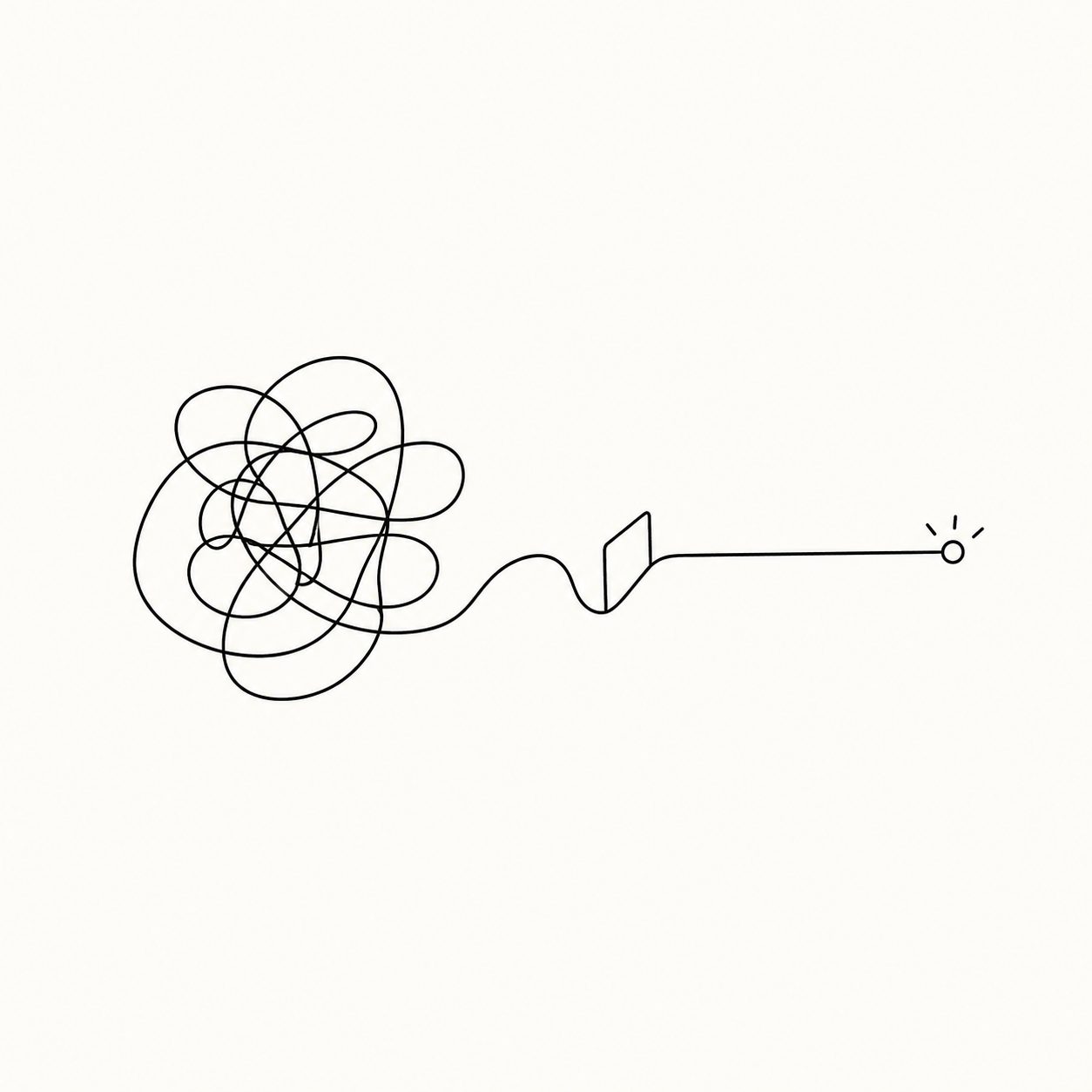
A task can be objectively easy and still be psychologically difficult to begin. Sending a short message, booking an appointment or putting away a few items may carry boredom, uncertainty, shame or the demand to make a decision.
Key takeaways
- “Easy” describes the practical steps, not the emotional meaning of the task.
- Small tasks are often delayed when they are vague, unrewarding, associated with conflict or linked to a larger chain of work.
- Short-term relief reinforces delay even when the task would take only minutes.
- Clarifying the next physical action and lowering the activation barrier can make starting easier.
The hidden cost inside an easy task
Replying to an email may take two minutes, but the reply may commit you to a project, risk disappointing someone or force a decision. Booking a medical appointment is mechanically simple but can activate fear. Tidying one surface may symbolise a much larger backlog.
The brain responds to the emotional prediction, not only the number of steps. Calling the task easy can therefore increase shame without making it easier to start.
Easy tasks are often poorly defined
“Deal with the paperwork” is not a clear action. It contains sorting, finding information, deciding priorities and possibly contacting someone. Ambiguity creates friction because the brain must plan before it can act.
Convert the task into the next visible movement: open the envelope, place the document beside the computer, find the account number or write the first sentence. Clarity reduces the cost of initiation.
Low reward and delayed consequences
Many easy tasks are boring and provide little immediate satisfaction. Their benefit is the absence of a future problem, which is less motivating than a current reward. A phone, conversation or more interesting task wins the competition for attention.
As long as consequences remain distant, postponement feels inexpensive. When the deadline arrives, urgency finally creates enough stimulation to act—reinforcing the belief that pressure is necessary.
Negative emotion and self-criticism
Research on procrastination highlights the role of mood regulation. People may delay to escape irritation, anxiety, inadequacy or resentment. The relief is brief, but it strengthens the habit.
Self-criticism then turns a small task into an identity test: “A competent person would have done this already.” That thought raises the emotional cost of reopening the task. A neutral description—“I have avoided this because it carries discomfort”—is more useful.
Strategies for very small delayed tasks
- Use the two-minute entry, not the two-minute rule: work for two minutes even if the entire task is longer.
- Pair tasks by location: make the call while already outside or answer messages after opening the computer.
- Create a tiny-task list: group several low-reward actions into one short block.
- Remove the decision: assign a fixed time or simple rule, such as booking appointments immediately after receiving a referral.
- Finish the emotional sentence: “If I do this, I am afraid/annoyed that…”
The goal is not to prove discipline. It is to reduce the gap between intention and the first action.
When easy-task procrastination is part of a broader difficulty
Widespread trouble initiating simple tasks can occur with anxiety, depression, ADHD, sleep deprivation, burnout or overwhelming life circumstances. The pattern alone cannot identify the cause.
Consider professional assessment when difficulties are persistent across settings, create serious consequences or occur with low mood, severe anxiety, attention problems or loss of daily functioning.
Identify what makes starting difficult
The MindLabIQ Procrastination Test helps organise patterns of delay, avoidance and emotional response. It is a reflection tool rather than a diagnostic assessment.
Explore the Procrastination TestCommon questions
Why can I do difficult work but avoid a tiny task?
The difficult work may be interesting, structured or rewarding, while the tiny task carries ambiguity, conflict, boredom or an unwanted commitment.
Does the two-minute rule always work?
No. It helps when initiation is the main barrier. It may not solve anxiety, unclear decisions or a larger workload problem.
Is procrastinating on easy tasks a sign of ADHD?
It can occur in ADHD, but it is also common with anxiety, depression, fatigue, burnout and ordinary avoidance. A full assessment is needed for diagnosis.
Sources and further reading
- Steel, P. (2007). The nature of procrastination: a meta-analytic and theoretical review.
- Pollack, S. & Herres, J. (2020). Negative affect and subsequent procrastination.
- Wypych, M. et al. (2018). Impulsivity, motivation and emotion regulation in procrastination.
- Rozental, A. et al. (2015). Internet-based cognitive-behaviour therapy for procrastination.
Responsible-use notice
This article provides general educational information about procrastination and self-regulation. Persistent difficulty starting or completing tasks can have many causes, and an online questionnaire cannot diagnose ADHD, anxiety, depression or another condition.