
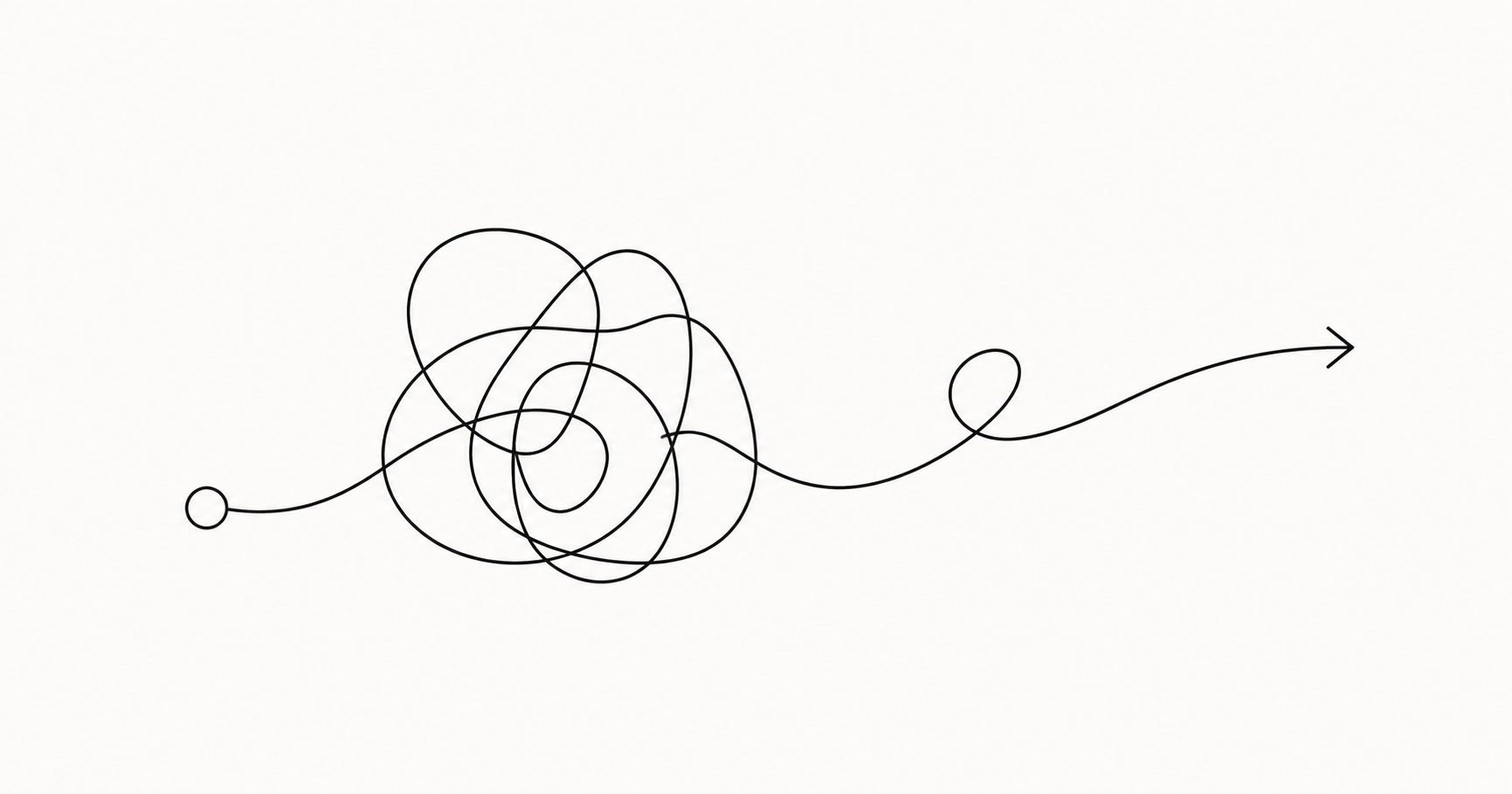
Wanting to start and being able to start are not the same process. Procrastination often appears when an important task creates discomfort and a competing activity offers faster emotional relief.
Key takeaways
- Procrastination is often a short-term emotion-regulation strategy rather than a simple lack of intention.
- Tasks are harder to start when they feel vague, aversive, overwhelming or distant from reward.
- Motivation often increases after action begins rather than before it.
- The most effective first step is usually smaller and more concrete than the mind initially expects.
Why intention does not automatically produce action
An intention is a decision about the future. Starting requires attention, emotional tolerance, available energy and a clear first behaviour in the present. A person can care deeply about a task while still avoiding the feelings attached to it.
The gap becomes larger when the task is ambiguous. “Work on the report” forces the brain to decide where to begin, what quality is expected and how long the task will take. Each unresolved decision adds friction.
Procrastination as short-term emotional relief
Research increasingly describes procrastination as an emotion-regulation problem. If a task triggers boredom, anxiety, shame, frustration or self-doubt, shifting to an easier activity changes the emotional state immediately.
The relief rewards the avoidance. Unfortunately, the task remains and often becomes more threatening as time passes, creating a cycle of discomfort, escape, temporary relief and greater future stress.
Why distractions feel more compelling
Important tasks often offer delayed rewards, while phones, messages, food, games or small chores provide immediate feedback. The brain tends to discount future outcomes, especially when energy is low or the task has little personal meaning.
This does not make the person irrational in every sense. The choice solves the immediate emotional problem, but at the cost of the longer-term goal.
Make the first action visible
Replace abstract goals with a physical action that can be completed in a few minutes. “Study” becomes “open chapter four and write three questions.” “Do taxes” becomes “download the bank statement.”
A good first step leaves little room for negotiation. It does not need to be impressive; it needs to create movement and new information about the task.
Stop waiting for motivation to arrive first
Motivation is often treated as a requirement for action, but action can generate motivation by reducing uncertainty and creating progress. Commit to a short work period rather than the entire task.
Ten focused minutes can reveal that the task is easier than expected, identify the real obstacle or produce enough momentum to continue. If it does not, the session still provides useful information.
Reduce the number of competing choices
Make the intended action easier and the distraction slightly harder. Prepare the document, materials or workspace in advance. Move the phone out of reach, close unrelated tabs and use a timer that defines when the work period ends.
Environmental design is not cheating. It acknowledges that self-control is affected by cues, energy and convenience.
When the pattern needs deeper attention
Persistent procrastination can be connected to perfectionism, anxiety, depression, burnout, ADHD, sleep problems or overwhelming life circumstances. Seek support when delay repeatedly damages work, education, finances, health or relationships despite serious efforts to change.
A professional can help identify whether the main problem is emotion, executive function, low mood, unrealistic demands or another condition requiring treatment.
Identify what is maintaining your procrastination
The MindLabIQ Procrastination Test explores delay, avoidance, emotional reactions and impact on daily life. It is a self-reflection tool rather than a diagnosis.
Explore the Procrastination TestCommon questions
Why can I do easy tasks but not the important one?
Easy tasks usually offer clarity, quick completion and low emotional risk. Important tasks may involve uncertainty, delayed reward or fear of evaluation.
Should I force myself to finish once I start?
Not always. A short, defined session can lower resistance and build consistency without making every start feel like an endless commitment.
Is procrastination laziness?
Usually not. Laziness implies little concern about the outcome, while procrastination often includes strong intention, distress and regret.
Sources and further reading
- Steel, P. (2007). The nature of procrastination: a meta-analytic and theoretical review.
- Pollack, S. & Herres, J. (2020). Negative affect and subsequent procrastination.
- Wypych, M. et al. (2018). Impulsivity, motivation and emotion regulation in procrastination.
- Rozental, A. et al. (2015). Internet-based cognitive-behaviour therapy for procrastination.
Responsible-use notice
This article provides general educational information. Persistent procrastination can have several causes, and an online test cannot diagnose ADHD, anxiety, depression or another condition.