
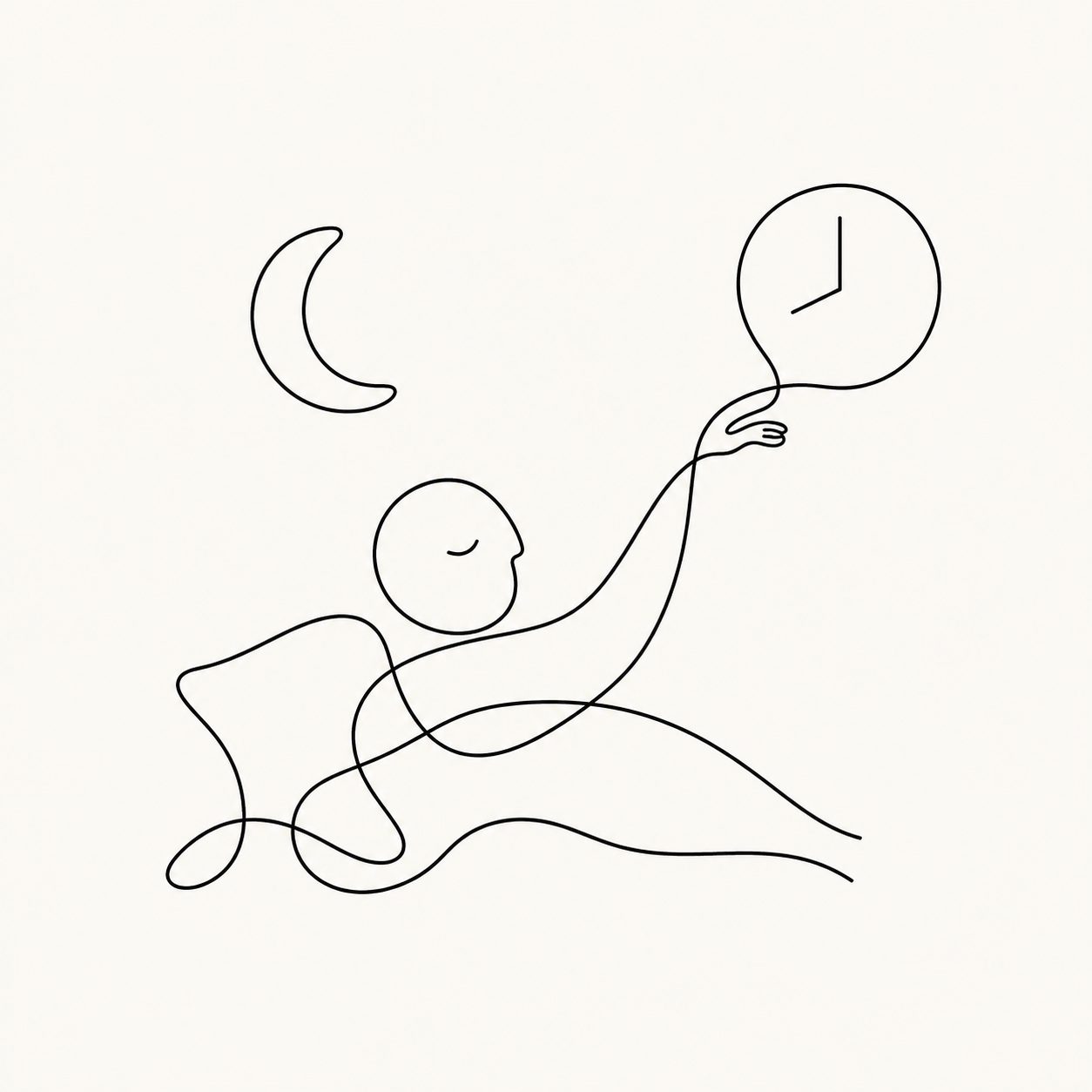
You are exhausted and know tomorrow will be easier if you sleep, yet you keep scrolling, watching or doing small personal activities late into the night. Bedtime procrastination describes this voluntary delay when no external emergency is preventing sleep.
Key takeaways
- Bedtime procrastination is delaying sleep without an external reason that requires the delay.
- The popular word “revenge” highlights the feeling of reclaiming personal time after a day controlled by demands.
- Research links bedtime procrastination with shorter sleep, poorer sleep quality and greater daytime fatigue.
- Effective change usually requires protecting personal time earlier and making the transition to bed easier, not relying on willpower at midnight.
What is revenge bedtime procrastination?
Bedtime procrastination is the voluntary postponement of going to bed despite expecting negative consequences. The “revenge” label is a popular cultural description rather than a formal diagnosis. It captures the experience of taking time back at night when work, parenting, study or caregiving has left little autonomy during the day.
Not every late bedtime is procrastination. Shift work, insomnia, caring for a child, pain and unexpected responsibilities can all delay sleep without a voluntary choice. The pattern is most relevant when you are able to go to bed, intend to do so and repeatedly choose something else.
Why staying awake can feel rewarding
At night, immediate rewards are concrete: another episode, a quiet room, a game, a conversation or uninterrupted browsing. The cost—fatigue tomorrow—is delayed. When self-control is already depleted, the immediate reward often wins.
The behaviour can also protect a psychological need. If the day contained obligation but little choice, late-night activity may be the only period that feels personally owned. Removing the phone without restoring autonomy elsewhere may therefore address the surface behaviour but not its function.
How bedtime procrastination affects sleep
A systematic review and meta-analysis found associations between bedtime procrastination and shorter sleep duration, poorer sleep quality and greater daytime fatigue. The evidence is largely correlational, so it does not prove that bedtime procrastination alone causes every sleep problem, but the pattern is consistent.
Sleep loss can then weaken attention, emotion regulation and self-control the next evening, making delay more likely. This creates a feedback loop in which the strategy used to recover personal time makes the following day more difficult and controlled by fatigue.
Deliberate, mindless and strategic delay
Qualitative research suggests that bedtime delay can take different forms. Deliberate delay is conscious: “I know I should sleep, but I want this time.” Mindless delay happens when an activity absorbs attention and the planned bedtime passes almost unnoticed. A third pattern involves practical tasks that expand late into the evening because no stopping rule was set.
Identifying the pattern matters. A deliberate autonomy problem needs protected leisure; mindless scrolling needs cues and friction; expanding tasks need a clear shutdown time.
Practical ways to reduce bedtime procrastination
- Schedule legitimate personal time earlier: even 20 protected minutes can reduce the sense that bedtime steals your only freedom.
- Create a closing cue: an alarm can signal “begin the bedtime sequence,” not merely “go to sleep immediately.”
- Reduce decision-making: repeat the same short sequence—plug in devices, wash, prepare the room, read briefly.
- Add friction to the main delay: charge the phone outside reach, disable autoplay or log out of the most absorbing app.
- Choose a latest start time: decide when the final episode, game or task may begin.
A recent pilot intervention suggests that targeted behavioural strategies can reduce bedtime procrastination, though larger trials are still needed.
When a sleep problem needs a different approach
If you go to bed but cannot sleep, wake repeatedly, experience breathing problems, have severe daytime sleepiness or work irregular shifts, bedtime procrastination may not be the main issue. A healthcare professional can assess insomnia, sleep apnoea, mood conditions, medication effects and other contributors.
The goal is not perfect bedtime discipline. It is a routine that respects both sleep and the need for autonomy, pleasure and decompression.
Understand the pattern behind delay
The MindLabIQ Procrastination Test can help you reflect on avoidance, task initiation and self-regulation patterns. It is not a sleep or medical assessment.
Explore the Procrastination TestCommon questions
Is revenge bedtime procrastination a medical diagnosis?
No. Bedtime procrastination is a research concept, while “revenge bedtime procrastination” is a popular phrase describing the wish to reclaim personal time.
Why do I delay sleep even when I am very tired?
Immediate rewards and a need for autonomy can outweigh the delayed cost of tomorrow’s fatigue, especially when self-control is depleted.
Will putting my phone away solve the problem?
It may help if the delay is mainly automatic scrolling. If the deeper issue is lack of personal time, you may also need to protect satisfying time earlier in the day.
Sources and further reading
- Hill, V. M. et al. (2022). Bedtime procrastination correlates and sleep outcomes: systematic review and meta-analysis.
- Nauts, S. et al. (2019). A qualitative study of the varieties of bedtime procrastination.
- Kroese, F. M. et al. (2016). A self-regulation perspective on sleep insufficiency and bedtime procrastination.
- Hill, V. M. et al. (2025). A randomised pilot trial for bedtime procrastination.
Responsible-use notice
This article provides general educational information about procrastination and self-regulation. Persistent difficulty starting or completing tasks can have many causes, and an online questionnaire cannot diagnose ADHD, anxiety, depression or another condition.