
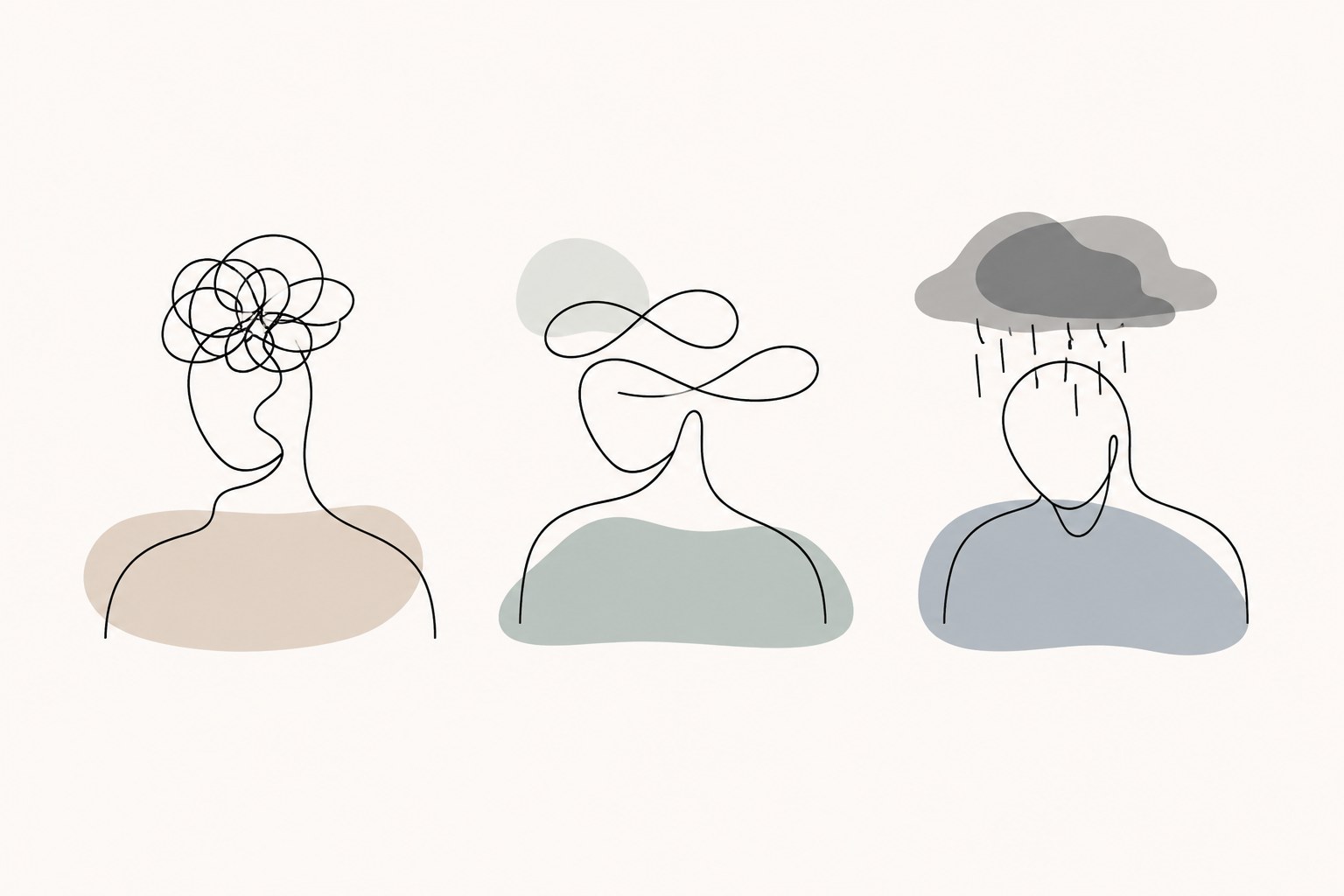
Burnout, stress and depression can all involve exhaustion, poor concentration and changes in sleep. The difference is not always obvious, especially when several problems occur at the same time.
Key takeaways
- Stress is a response to demands and may improve when the stressor is resolved.
- Burnout is tied to chronic workplace stress and includes exhaustion, mental distance and reduced efficacy.
- Depression is a mood disorder that can affect nearly every area of life, not only work.
- Because symptoms overlap, severe or persistent changes deserve professional assessment rather than self-diagnosis.
What stress usually looks like
Stress is the body and mind’s response to pressure or demand. It often has an identifiable trigger: a deadline, conflict, financial problem, illness or period of uncertainty. Stress can make a person tense, restless, irritable or unable to sleep, but symptoms often decrease when the situation improves or the person has enough time to recover.
Short-term stress is not automatically harmful. It can increase alertness and help someone respond to a challenge. Problems arise when stress remains intense, unpredictable or uncontrollable for too long.
What makes burnout different
Burnout is specifically connected to chronic workplace stress. WHO describes it through exhaustion, increased mental distance or cynicism toward work, and reduced professional efficacy.
A burned-out person may feel temporarily better away from the workplace, although severe burnout can spill into sleep, relationships and general health. The work connection is central: symptoms often intensify when the person anticipates returning to the same demands.
What makes depression different
Depression is a mental-health disorder rather than an occupational phenomenon. Common symptoms include persistent low or empty mood, loss of interest or pleasure, hopelessness, guilt, fatigue, sleep or appetite changes and difficulty concentrating. Symptoms typically affect more than one area of life and may continue even when the person is away from work.
Someone can enjoy a holiday less because of depression, whereas a person with work-related burnout may experience a clearer improvement when genuinely separated from the job. This is only a clue, not a diagnostic test.
Burnout, stress and depression compared
| Feature | Stress | Burnout | Depression |
|---|---|---|---|
| Main context | Response to identifiable demands | Chronic workplace stress | Can affect all areas of life |
| Typical emotional tone | Tension, urgency, worry | Exhaustion, cynicism, detachment | Low mood, emptiness, hopelessness or loss of pleasure |
| Response to rest | Often improves when pressure reduces | May improve away from work but return with unchanged conditions | May persist despite time away from stressors |
| Clinical status | Normal response that can become harmful | Occupational phenomenon in ICD-11 | Recognised mental-health disorder |
Why the conditions overlap
Research finds substantial correlations between burnout, anxiety and depression, especially around exhaustion and reduced functioning. This does not mean they are the same construct. It means that chronic strain can affect mood, sleep, cognition and motivation in ways that look similar.
It is also possible to have more than one condition. A person may develop burnout in response to work and also experience major depression. The correct response is not to choose the “best label” alone, but to assess severity, duration, context and safety.
What to do next
Start by noticing where symptoms occur. Are they strongly tied to work, or present across weekends, relationships and activities you usually enjoy? Have they lasted days, weeks or months? Are you still able to meet essential responsibilities?
For work-linked symptoms, discuss workload, role clarity, support and recovery with an appropriate person. For persistent low mood, loss of pleasure, hopelessness or major changes in sleep and appetite, contact a health professional.
Reflect on your burnout symptoms
The MindLabIQ Burnout Test can help organise work-related symptoms, but it cannot distinguish or diagnose depression.
View the Burnout TestWhen help is urgent
Seek urgent local help if you have thoughts of suicide, self-harm or harming someone else, or if you feel unable to keep yourself safe. Contact your local emergency number or crisis service. Online content and self-tests cannot provide emergency support.
Sources and further reading
Responsible-use notice
This comparison is educational and cannot determine whether you have burnout, depression or another condition. Persistent or severe symptoms should be assessed by a qualified professional.