
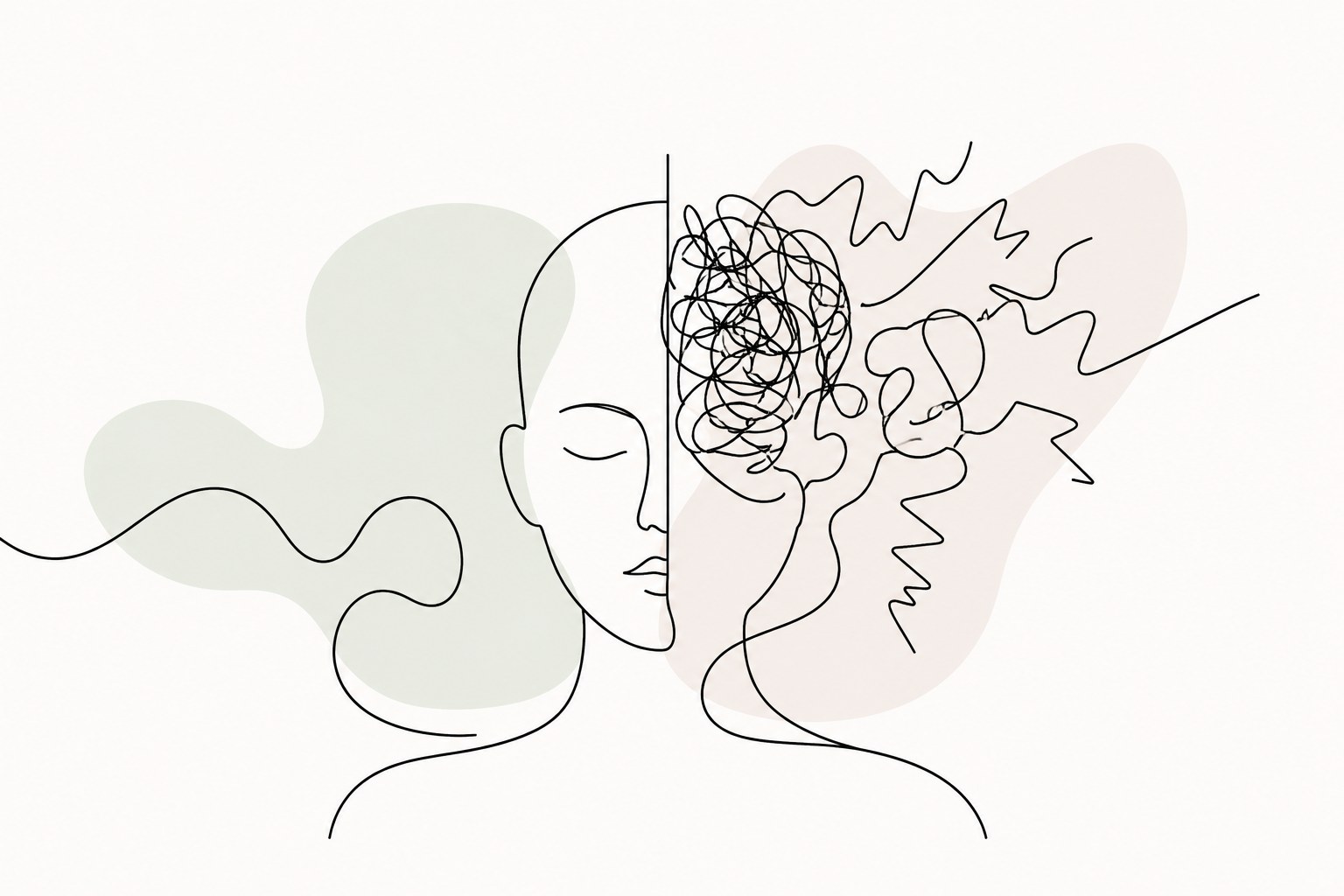
Stress and anxiety share many symptoms, including tension, poor sleep and racing thoughts. A useful difference is that stress is usually linked to an external demand, while anxiety can continue even when there is no immediate threat.
Key takeaways
- Stress commonly begins with an identifiable pressure and may reduce when the problem is resolved.
- Anxiety can persist, spread across situations and involve apprehension even without a current danger.
- Both can cause physical symptoms and interfere with daily functioning.
- If symptoms are persistent, severe or lead to avoidance, professional support may be appropriate.
What is stress?
Stress is a physical and psychological response to demand. The trigger may be a deadline, conflict, illness, financial problem or major life change. The body increases alertness and prepares for action.
Stress can be brief or chronic. It can also be motivating in manageable amounts. The key question is whether the person has enough control, support and recovery to meet the demand.
What is anxiety?
Anxiety is a state of apprehension, worry or fear. It can be a normal response to stress, but it may continue after the stressor has passed or arise when no clear threat is present.
Anxiety disorders involve more than occasional worry. Symptoms persist, are difficult to control and interfere with work, school, relationships or ordinary activities.
Stress and anxiety compared
| Feature | Stress | Anxiety |
|---|---|---|
| Typical trigger | External demand or problem | May be triggered externally or occur without a current threat |
| Time course | Often decreases when the situation resolves | May persist or generalise to many situations |
| Common thoughts | “I have too much to do” | “Something bad may happen” |
| Common behaviours | Overworking, rushing, irritability | Avoidance, reassurance seeking, checking |
Why both feel physical
Stress and anxiety activate systems involved in threat response. Common symptoms include muscle tension, headaches, faster heartbeat, sweating, stomach discomfort and disturbed sleep. These symptoms are real, but they are not specific; medical conditions can produce similar sensations.
New, severe or unexplained physical symptoms should not automatically be attributed to anxiety. A health professional can help rule out other causes.
What helps with stress and anxiety?
For stress, practical problem-solving may be central: reducing demands, negotiating deadlines, asking for support or creating recovery time. For anxiety, it may also be necessary to work with worry, avoidance and threat interpretation.
Helpful general strategies include regular sleep, movement, reduced excess caffeine, slow breathing, identifying triggers and gradually returning to avoided activities. Persistent anxiety often responds well to evidence-based psychotherapy, and medication may be appropriate in some cases.
Organise your anxiety symptoms
The MindLabIQ Anxiety Test is a self-assessment for reflection. It cannot diagnose an anxiety disorder.
View the Anxiety TestWhen to seek help
Talk with a health professional when symptoms do not go away, interfere with daily life, cause substantial avoidance or make it difficult to sleep, concentrate or complete normal responsibilities. Seek urgent local help for thoughts of self-harm, suicide or inability to stay safe.
Common questions
Can chronic stress turn into anxiety?
Chronic stress can contribute to persistent anxiety, although anxiety disorders are influenced by many biological, psychological and environmental factors.
Can I have both stress and anxiety?
Yes. A real external stressor can trigger anxiety that continues beyond the immediate situation.
Is all anxiety unhealthy?
No. Occasional anxiety is normal. It becomes more concerning when it is persistent, disproportionate or disruptive.
Sources and further reading
Responsible-use notice
This article cannot determine whether symptoms are caused by stress, anxiety or a physical condition. Seek medical advice for severe, persistent or unexplained symptoms.