
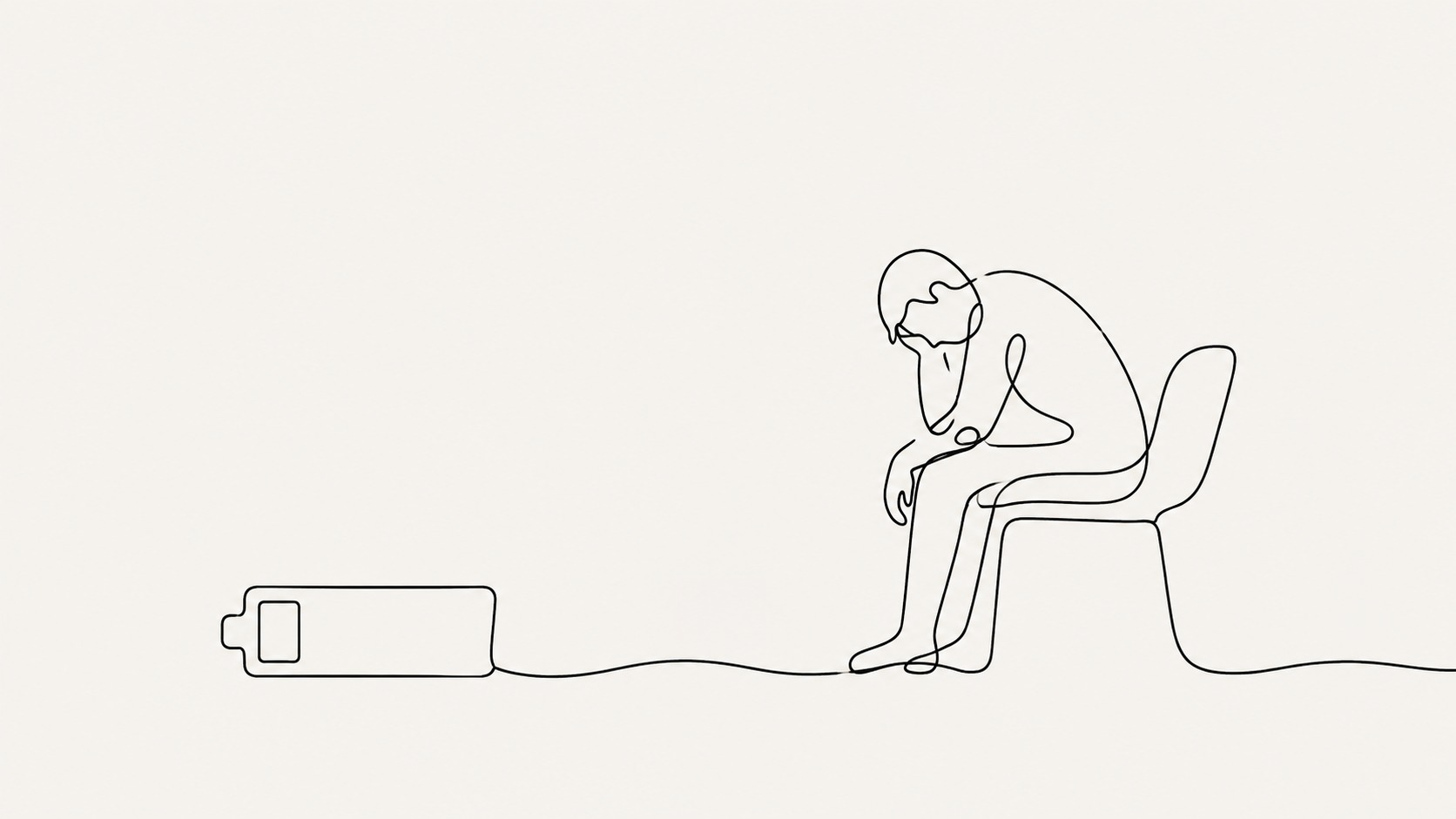
Burnout is more than feeling tired after a difficult week. It is a pattern of exhaustion, growing distance from work and reduced confidence that can develop when workplace stress remains intense and recovery is repeatedly interrupted.
Key takeaways
- WHO describes burnout as an occupational phenomenon resulting from chronic workplace stress that has not been successfully managed.
- The core pattern includes exhaustion, mental distance or cynicism, and reduced professional efficacy.
- Burnout can overlap with anxiety or depression, but the terms are not interchangeable.
- Recovery usually requires both personal recovery time and changes to the conditions that keep producing overload.
What is burnout?
The World Health Organization includes burnout in the ICD-11 as an occupational phenomenon, not as a medical condition. Its definition is specific to the work context and describes a syndrome linked to chronic workplace stress that has not been successfully managed.
That distinction matters. People sometimes use “burnout” to describe any form of exhaustion, including parenting strain, caregiving fatigue or general life overload. Those experiences can be serious, but occupational burnout refers specifically to the relationship between a person and their work.
The three central signs of burnout
Burnout is usually described through three connected dimensions:
- Exhaustion: feeling emotionally or physically depleted by work, often before the working day has even begun.
- Mental distance or cynicism: becoming detached, irritable, negative or numb toward work, colleagues, clients or the purpose of the job.
- Reduced professional efficacy: feeling less capable, productive or effective, even when objective performance has not collapsed.
These signs often reinforce one another. Exhaustion makes it harder to engage. Detachment can reduce satisfaction. Reduced confidence then makes ordinary demands feel heavier.
What causes burnout?
Burnout is rarely explained by a single personality trait or one stressful week. It is more often associated with a sustained mismatch between demands and resources. Research on workplace stress repeatedly points to factors such as excessive workload, low control, inadequate support, unfair treatment, poor role clarity and effort that is not matched by recognition or reward.
Personal habits matter, but they do not replace organisational responsibility. A person can sleep well, exercise and practise relaxation while still remaining in a system with impossible deadlines, chronic understaffing or unclear expectations.
Early warning signs in daily life
Burnout often develops gradually. Early signs may include dreading work more than usual, needing longer to recover after ordinary tasks, becoming impatient with people you normally tolerate well, making more avoidable mistakes or losing interest in work that once felt meaningful.
Physical symptoms can also appear, including disturbed sleep, headaches, muscle tension, stomach discomfort or a sense of being constantly “wired but tired.” These symptoms are not specific to burnout, so persistent or severe physical changes should also be discussed with a health professional.
How burnout recovery begins
Recovery starts by reducing the gap between demands and available resources. Helpful steps can include clarifying priorities, reducing non-essential tasks, taking protected breaks, discussing workload with a manager, restoring sleep routines and rebuilding contact with supportive people.
Evidence suggests that combined approaches are often more useful than placing the entire burden on the individual. Person-directed strategies can help with coping and recovery, while organisation-directed changes address workload, staffing, control and work design.
Check your current burnout pattern
The MindLabIQ Burnout Test is a self-reflection tool that explores exhaustion, distance from work and perceived effectiveness. It is not a diagnosis.
View the Burnout TestWhen to seek professional help
Consider speaking with a doctor or mental health professional when exhaustion is persistent, daily functioning is deteriorating, sleep or appetite has changed substantially, or you feel unable to recover even when away from work. Professional support is especially important if low mood, hopelessness, panic, substance use or thoughts of self-harm are present.
A clinician can help distinguish burnout from depression, anxiety, sleep disorders, physical illness and other conditions that may require different treatment.
Common questions
Can a holiday cure burnout?
Time away can reduce immediate strain, but symptoms may return if the same workload, lack of control or organisational problems remain unchanged.
Is burnout only caused by working too many hours?
No. Hours matter, but low control, value conflicts, unfairness, poor support and emotional demands can also contribute.
Can burnout and depression occur together?
Yes. They are related but not identical, and a professional assessment may be needed when symptoms extend beyond the work context.
Sources and further reading
- World Health Organization. Burn-out as an occupational phenomenon in ICD-11.
- Koutsimani, P. et al. (2019). The relationship between burnout, depression and anxiety.
- Pijpker, R. et al. (2019). Combined interventions to reduce burnout complaints.
- van der Molen, H. et al. (2020). Work-related psychosocial risk factors for stress-related disorders.
Responsible-use notice
This article provides general educational information. Burnout symptoms can overlap with medical and mental-health conditions. MindLabIQ does not diagnose burnout, depression or any other disorder.