
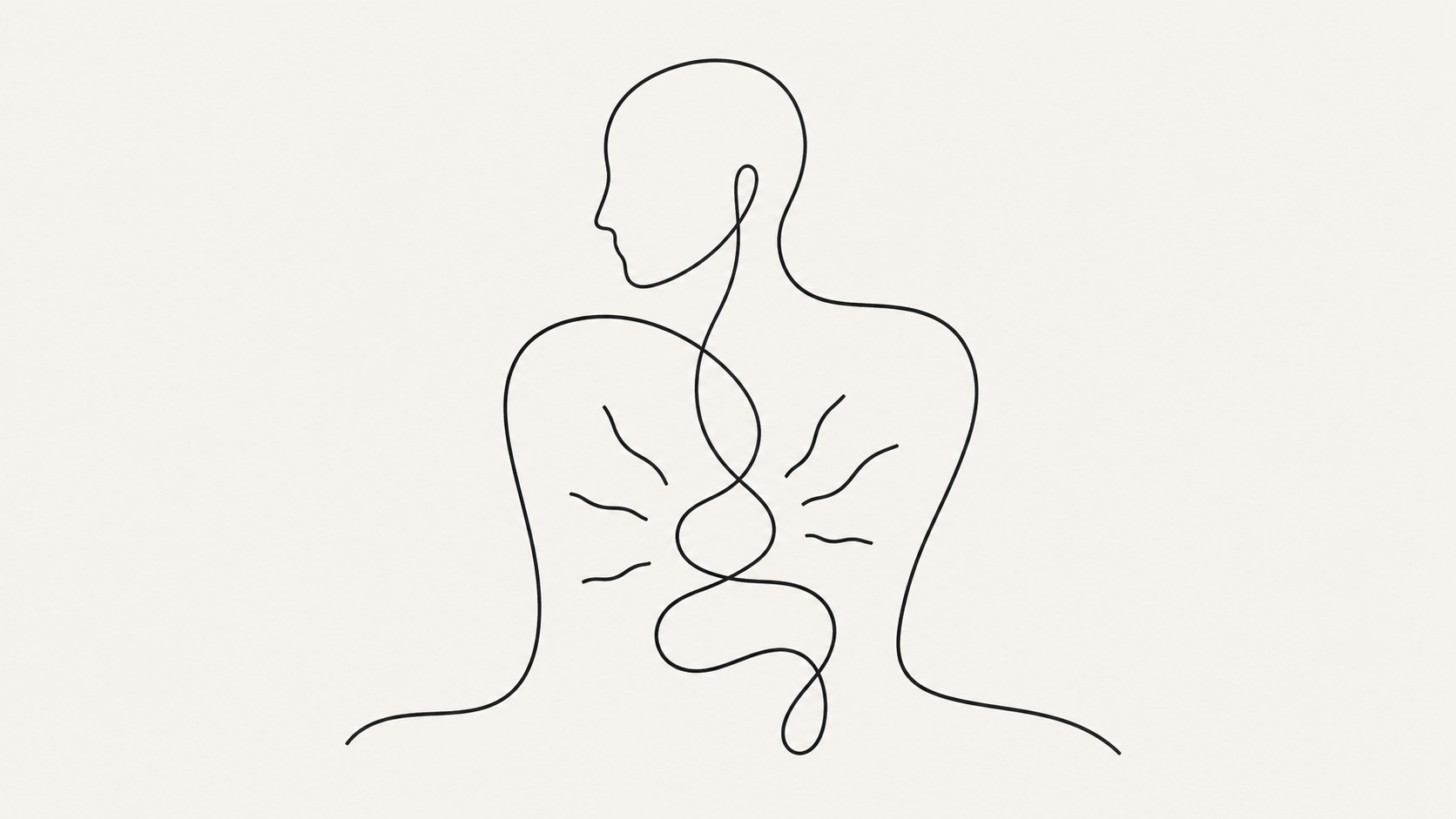
Anxiety is often described as worry, but many people first notice it in the body. A racing heart, tight chest, dizziness or stomach discomfort can feel frightening, especially when the cause is unclear.
Key takeaways
- Anxiety activates threat-response systems that change heart rate, breathing, muscle tension and digestion.
- Physical symptoms are real, even when they are produced or amplified by anxiety.
- Anxiety symptoms can resemble medical problems, so new or severe symptoms should be assessed appropriately.
- Learning how the body responds can reduce fear, but it should not be used to dismiss warning signs.
Why anxiety creates physical symptoms
When the brain detects threat, the autonomic nervous system prepares the body for action. Heart rate may increase, breathing may become faster, muscles tense and digestion changes. Stress hormones such as adrenaline support this response.
The system is useful during real danger. In anxiety, it can activate in response to thoughts, memories, uncertainty or situations that are not physically dangerous.
Racing heart, chest tightness and palpitations
Anxiety can increase heart rate and awareness of normal heartbeats. Faster breathing and chest-muscle tension may add tightness or discomfort. Once a person notices the sensation, fear about the heart can intensify the response.
Chest pain, fainting, severe shortness of breath or symptoms linked to exertion should be assessed urgently according to local medical guidance. Do not assume every chest symptom is anxiety.
Shortness of breath, tingling and dizziness
During anxiety, some people breathe faster or more deeply than the body requires. This can change carbon-dioxide levels and contribute to light-headedness, tingling around the mouth or hands, and feelings of unreality.
Slow, gentle breathing may help, but forcing very deep breaths can worsen over-breathing. A comfortable rhythm with a slightly longer exhale is often easier.
Stomach and digestive symptoms
The brain and digestive system communicate closely. Anxiety may contribute to nausea, butterflies, abdominal discomfort, urgency, diarrhoea or reduced appetite. Worry about these symptoms can then lead to avoidance of travel, social situations or unfamiliar food.
Persistent digestive symptoms, weight loss, bleeding, fever or severe pain require medical assessment.
Muscle tension, headaches and fatigue
Threat preparation tightens muscles, especially around the jaw, neck, shoulders and back. Sustained tension can contribute to headaches or pain. Anxiety can also disturb sleep and keep the body in a state of high alert, creating fatigue despite feeling unable to relax.
The fear-of-symptoms cycle
Physical sensations become more distressing when interpreted as proof of immediate danger. The person checks the body, becomes more alert to every change and avoids activities that might produce similar sensations. This can strengthen the cycle.
Evidence-based treatment often helps people reinterpret sensations and gradually reduce avoidance. Medical evaluation is important when the cause is uncertain.
See how anxiety affects you
The MindLabIQ Anxiety Test organises worry, physical symptoms, avoidance and impact on daily life. It is not a diagnosis.
View the Anxiety TestWhen physical symptoms need medical help
Seek urgent help for severe chest pain, fainting, signs of stroke, serious breathing difficulty, a suspected allergic reaction or any symptom that feels life-threatening. Arrange non-emergency medical advice for new, persistent or unexplained symptoms, especially when you have relevant medical risk factors.
It is possible for anxiety and a physical condition to occur together. A mental-health explanation should not prevent appropriate medical care.
Common questions
Can anxiety cause symptoms when I do not feel mentally worried?
Yes. The body can remain activated even when conscious worry is not prominent, and some people notice physical sensations first.
Can anxiety cause pain?
Muscle tension, headaches and altered pain sensitivity can occur with anxiety, but persistent pain still deserves appropriate assessment.
Why do symptoms get worse when I check them?
Monitoring increases attention to normal fluctuations and can intensify threat interpretation, which activates the body further.
Sources and further reading
Responsible-use notice
Physical symptoms can have many causes. This article is not medical advice and should not be used to rule out heart, lung, neurological, endocrine or other medical conditions.