
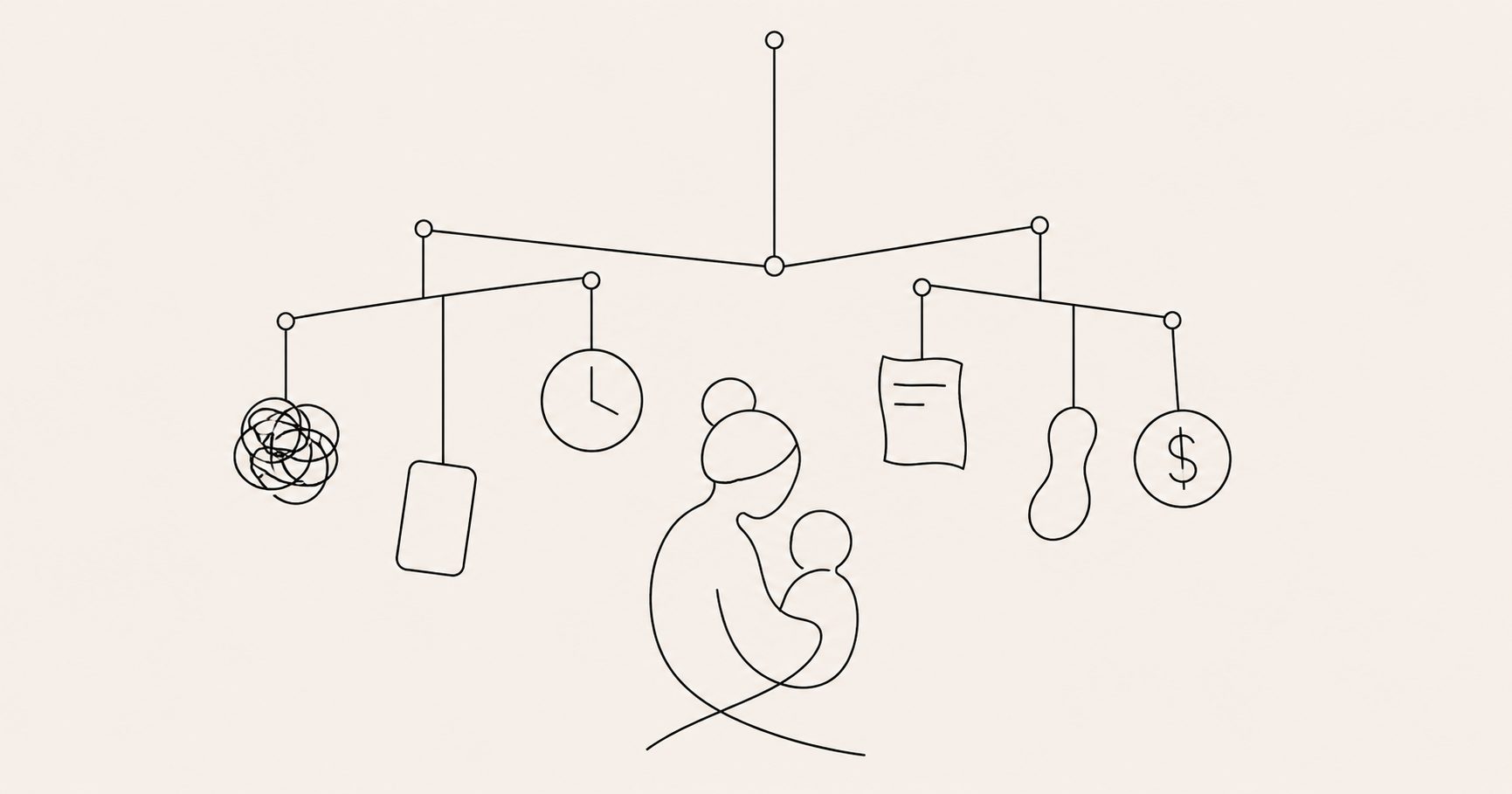
Parental burnout is not caused by one difficult child or one personal weakness. Risk rises when parenting demands remain chronically greater than the practical, emotional and social resources available to meet them.
Key takeaways
- Parental burnout is best understood as an imbalance between accumulating risks and protective resources.
- Perfectionism, low support, coparenting conflict and chronic sleep disruption can increase vulnerability.
- Parents of children with complex or special needs may face additional demands, but outcomes still depend on available resources.
- Risk factors are not destiny; changing even part of the balance can support recovery.
The balance between risks and resources
The balance model of parental burnout proposes that no single demand automatically causes burnout. Risk grows as burdens accumulate without enough recovery, support, flexibility or meaning to counter them.
Two parents with similar schedules can therefore have very different experiences. One may have reliable childcare, a supportive partner and flexible work. The other may have no backup, financial pressure and a belief that asking for help is unacceptable.
Chronic practical and emotional overload
High workload includes visible tasks such as meals, transport and bedtime, but also invisible labour: remembering appointments, monitoring school communication, planning clothes, anticipating needs and managing family emotions.
Burnout risk increases when one person carries most of this responsibility, when demands are unpredictable or when the parent never becomes fully off duty.
Perfectionism and unrealistic parenting standards
Parents who believe they must always be patient, available, stimulating and emotionally regulated may interpret ordinary mistakes as evidence of failure. These standards increase effort while removing the sense of completion.
Perfectionism is especially costly when the parent compares daily reality with idealised social-media images or feels that love must be demonstrated through constant self-sacrifice.
Low support and difficult coparenting
Support is more than having people nearby. Effective support includes practical help, emotional validation and confidence that another adult can take responsibility without constant supervision.
Research on coparenting suggests that weak coordination and low mutual support can increase parental burden. Conflict also consumes resources that would otherwise be available for recovery and problem-solving.
Children with complex needs and persistent stressors
Parents caring for a child with chronic illness, disability, developmental differences or severe behavioural difficulties may face additional appointments, uncertainty, advocacy and sleep disruption. These demands can raise risk, especially when services and respite are limited.
The child is not the cause of burnout. The relevant issue is the relationship between demands and the supports available to the family.
Individual and contextual factors
Anxiety, depression, trauma history, low self-compassion, financial strain, workplace pressure and social isolation may all reduce available resources. Cultural expectations can also make it harder to admit difficulty or share care.
Risk factors often interact. Sleep loss can reduce emotional regulation, increasing conflict; conflict can reduce support; low support then makes sleep and recovery even harder.
Protective resources that can shift the balance
Protective resources include practical childcare, equitable task sharing, supportive relationships, realistic standards, access to services, financial stability, flexible work and permission to recover.
No family needs every resource. The most useful step is often identifying the risk that consumes the most energy and the resource most likely to reduce it.
Check which parental burnout dimensions are most active
The MindLabIQ Parental Burnout Test is a self-reflection tool that explores exhaustion, emotional distance and reduced fulfilment. It is not a clinical diagnosis.
Explore the Parental Burnout TestCommon questions
Are single parents always at higher risk?
Single parenting can increase workload and reduce backup, but risk depends on the full balance of demands and resources, including family, community and financial support.
Does having a child with special needs cause parental burnout?
It can increase demands, but the child is not the cause. Access to services, respite, social support and realistic expectations strongly shape risk.
Can a highly organised parent still burn out?
Yes. Organisation cannot compensate indefinitely for excessive demands, insufficient rest or lack of support.
Sources and further reading
- Mikolajczak, M. & Roskam, I. (2018). A theoretical and clinical framework for parental burnout.
- Ren, X. et al. (2024). Systematic review of parental burnout and related factors.
- Favez, N. et al. (2023). Coparenting and parental burnout.
- Roskam, I. et al. (2023). Parental burnout in special-needs and other family contexts.
Responsible-use notice
This article is educational and cannot determine an individual parent’s risk or safety. Seek professional support when symptoms are persistent, severe or associated with thoughts of harm.