
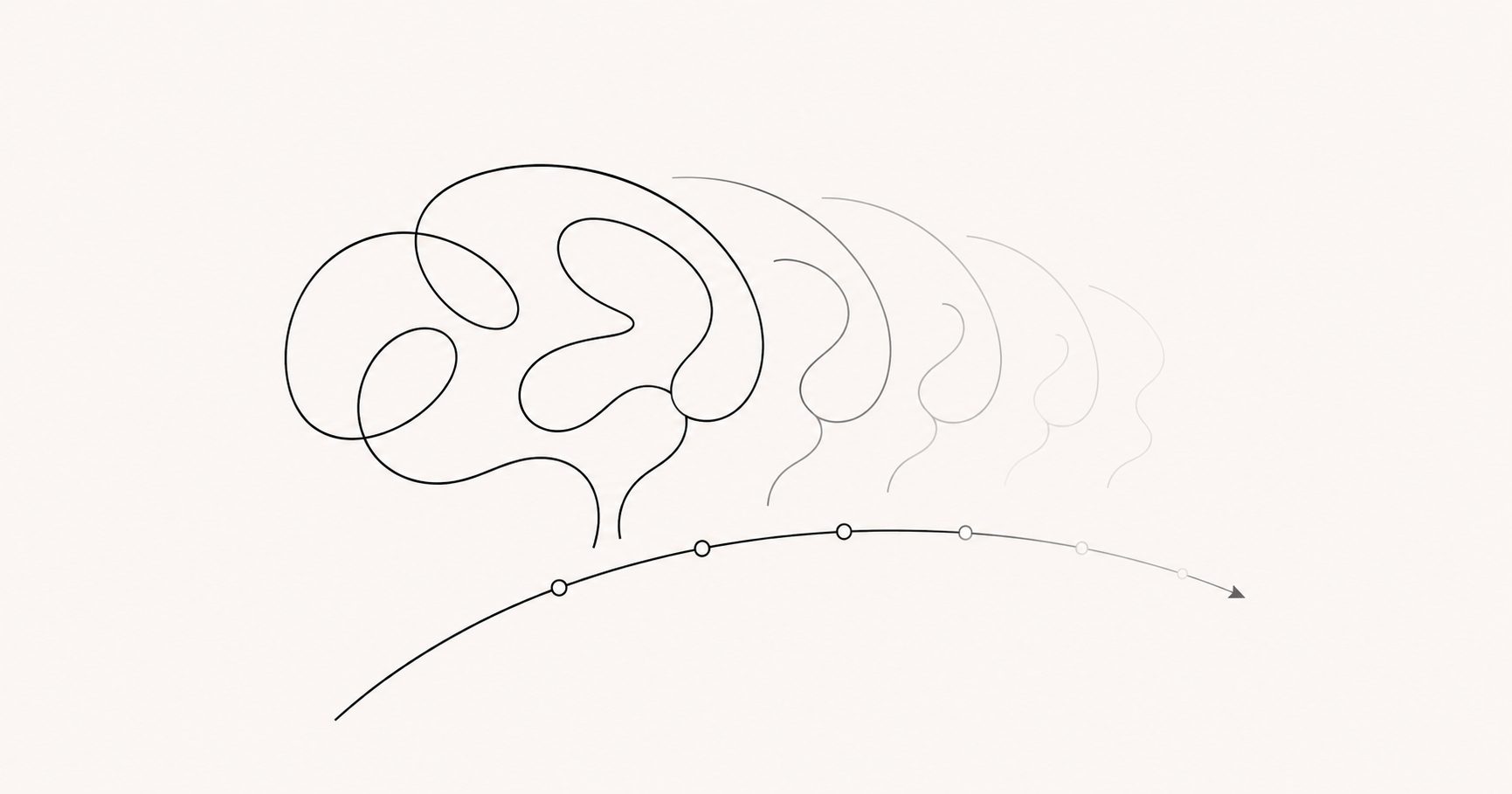
The question “Does IQ decline with age?” has no single yes-or-no answer because intelligence includes different abilities. Speed and novel problem-solving often change differently from vocabulary, expertise and accumulated knowledge.
Key takeaways
- Processing speed and fluid reasoning tend to decline gradually across adulthood on average.
- Vocabulary and crystallised knowledge often remain stable or improve into later adulthood.
- People differ substantially in the timing and size of cognitive change.
- A single lower score does not prove abnormal decline because sleep, health, stress and practice effects also influence testing.
IQ is made of different abilities
Full-scale IQ combines performance across several domains. Fluid abilities involve solving unfamiliar problems, identifying new patterns and manipulating information under time pressure. Crystallised abilities rely more on vocabulary, knowledge and skills accumulated through education and experience.
These abilities follow different age trajectories, so speaking about IQ as one uniform capacity can hide important detail.
What tends to happen to fluid reasoning and speed
Large studies of normal cognitive ageing commonly find gradual decline in processing speed from early or middle adulthood, with reasoning and memory showing more noticeable change later. Timed tasks may therefore become harder even when the person still understands the problem well.
This does not mean that every adult declines at the same rate. Health, sensory function, sleep, education, occupation and lifelong engagement contribute to large individual differences.
What often stays stable or improves
Vocabulary, general knowledge and expertise can remain stable for decades and may continue improving into later adulthood. Experience can also support better judgement, more efficient strategies and stronger understanding of familiar problems.
An older adult may take longer on a novel timed puzzle while outperforming a younger adult on questions that depend on language, context or accumulated knowledge.
Does a lower test score mean cognitive decline?
Not necessarily. A meaningful interpretation requires comparison with a suitable norm group and attention to test conditions. Fatigue, anxiety, pain, medication, poor sleep, hearing or vision difficulties and unfamiliarity with digital tasks can lower performance.
Repeated testing can also raise scores through practice, while switching tests can create apparent changes because the instruments differ. Clinical interpretation uses expected test–retest variability rather than treating every point difference as real change.
Can cognitive decline be prevented?
No activity can guarantee that cognition will remain unchanged, and normal ageing cannot be eliminated. However, physical activity, management of cardiovascular risk, social engagement, adequate sleep, treatment of hearing or vision problems and mentally stimulating activity are associated with healthier cognitive ageing.
Education and complex activity may contribute to cognitive reserve, helping people function effectively even when age-related changes occur. This should not be interpreted as proof that puzzles alone can increase general intelligence or prevent dementia.
When should a change be discussed with a professional?
Consider medical evaluation when change is rapid, clearly different from the person’s usual functioning, or interferes with everyday tasks such as managing money, medication, navigation or familiar routines. New language problems, confusion, personality change or safety concerns also warrant assessment.
An online IQ test cannot diagnose cognitive impairment or dementia. Clinical evaluation may include medical history, neurological examination, laboratory testing and validated cognitive assessment.
Explore your current reasoning profile
The MindLabIQ IQ Test provides an educational estimate based on structured reasoning tasks. It is not a clinical cognitive assessment and should not be used to investigate suspected decline.
Explore the IQ TestCommon questions
At what age does intelligence begin to decline?
Different abilities change at different times. Processing speed may decline earlier, while vocabulary and knowledge can remain stable or improve much longer.
Can older adults still learn new things?
Yes. Learning may require more time or repetition, but healthy older adults retain substantial capacity for new knowledge and skills.
Can an online IQ test detect dementia?
No. Suspected cognitive decline requires a professional medical and neuropsychological assessment.
Sources and further reading
- Tucker-Drob, E. M. et al. (2022). Changes in fluid and crystallised abilities across adulthood.
- Salthouse, T. A. (2019). Trajectories of normal cognitive ageing.
- Seblova, D. et al. (2020). Education and age-related decline in cognitive performance.
- Anstey, K. J. et al. (2004). Normal cognitive changes in ageing.
Responsible-use notice
This article is educational. An online IQ score cannot diagnose cognitive impairment, dementia or neurological illness. Seek professional assessment for concerning changes.